

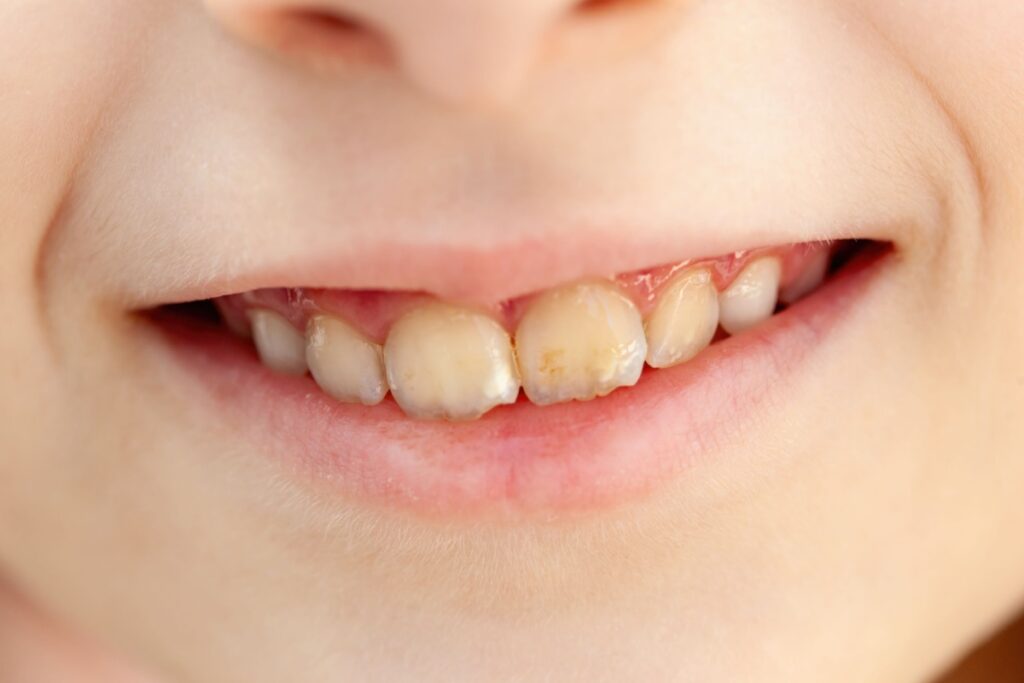
You look at your child’s smile and notice their teeth seem more yellow than you remember. Before you worry, know that yellow teeth in children happen more often than you might think. Many parents notice this change and wonder if something’s wrong.
Yellow teeth in children are usually normal and harmless, often caused by natural tooth development, diet, or simple plaque buildup that regular dental care can address. Understanding what causes yellow teeth helps you know when it’s just part of growing up and when you might need a visit to London Little Bites Dentistry.
What’s “Normal” for Children’s Teeth?
Baby Teeth vs. Adult Teeth
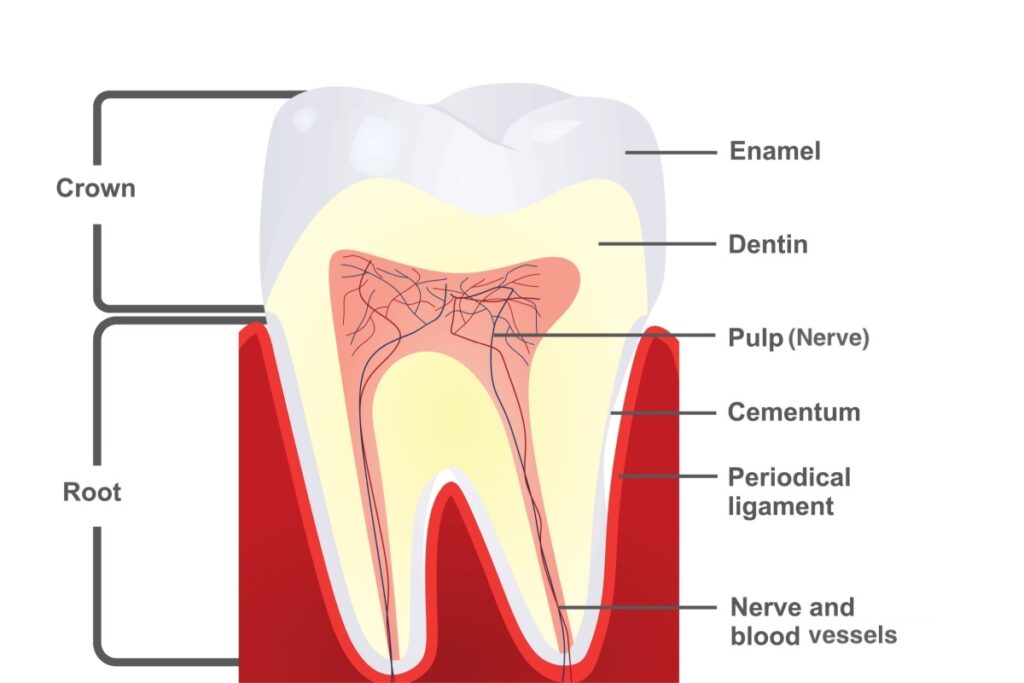
Baby teeth naturally appear whiter than adult teeth. When your child’s permanent teeth start coming in around age 6, you’ll notice they look more yellow next to the remaining baby teeth. This happens because adult teeth contain more dentin — the yellowish layer under the enamel.
During the mixed dentition phase (when your child has both baby and adult teeth), this colour difference becomes really obvious. The contrast makes the new permanent teeth look much more yellow than they actually are.
Genetics
Just like hair and eye colour, tooth colour runs in families. Some children naturally have thicker or thinner enamel, which affects how much of the yellow dentin shows through. If you or your partner have naturally more yellow teeth, your child might too, and that’s completely normal.
Common Causes of Yellow Teeth
Plaque or Poor Brushing
When plaque builds up on teeth, it creates a yellowish film that makes teeth look dingy. Young children often miss spots while brushing, especially around the gum line and back teeth. This buildup doesn’t mean permanent damage. It usually comes off with better brushing habits or a professional cleaning.
Diet & Drinks That Stain
Dark-coloured drinks like grape juice, chocolate milk, and sports drinks can stain teeth over time. Berries, tomato sauce, and other pigmented foods also contribute to yellowing. Even healthy choices like fruit juices contain natural sugars that feed bacteria and create more plaque.
When children sip these drinks slowly or hold them in their mouth, the staining effect increases. Sticky candies and gummy snacks cling to teeth longer, giving pigments more time to penetrate the enamel.
Enamel Erosion
Acidic drinks like citrus juices, sodas, and sports drinks can thin the enamel over time. As the protective enamel layer gets thinner, more of the yellow dentin underneath shows through. You might notice this especially if your child frequently drinks acidic beverages or has acid reflux.
Fluorosis
Mild fluorosis creates white or light yellow spots on teeth. This happens when children swallow too much fluoride toothpaste during tooth development. The spots are usually faint and more cosmetic than harmful.
Medications or Trauma
Certain antibiotics like tetracycline can cause tooth discolouration if taken during pregnancy or early childhood. Dental injuries can also change tooth colour. You might notice one tooth becoming darker than the others after a fall or sports accident.
When Yellow Teeth Need a Dentist’s Attention
Schedule an appointment if the yellowing doesn’t improve with good brushing habits after a few weeks. You should also contact a pediatric dentist if one tooth appears significantly darker than the others as this could signal nerve damage from trauma.
Look for signs like tooth sensitivity, visible cavities, or white chalky spots that might indicate enamel problems. These symptoms paired with yellowing often need professional evaluation.
How a Pediatric Dentist Can Help
A pediatric dentist can remove stubborn plaque and tartar buildup that home brushing can’t tackle. They’ll also examine your child’s enamel to check for developmental issues or early signs of decay that might be causing the discolouration.
The dentist can distinguish between harmless staining and fluorosis or other enamel defects. For older children and teens, they might discuss safe whitening options if appropriate. They’ll also provide personalized advice about your child’s specific situation and oral hygiene needs.
How Parents Can Help at Home
Help your child brush twice daily with fluoride toothpaste, supervising to make sure they reach all surfaces and don’t swallow the paste. For children under 3, use a rice-grain-sized amount of toothpaste. Children 3-6 need about a pea-sized amount.
Limit drinks that stain like dark juices and sodas, offering them during meals rather than as all-day sipping drinks. Encourage your child to drink water throughout the day, especially after eating coloured foods or drinks.
Regular dental checkups every six months help catch any issues early and keep teeth clean. Your pediatric dentist can recommend the right fluoride level for your child’s age and risk factors.
Your Child’s Smile Journey
Most yellow teeth in children result from normal development or habits you can easily address at home. Regular dental visits help you stay on top of your child’s oral health and catch any concerns early.
If you’re concerned about your child’s tooth colour, London Little Bites Dentistry can help. Schedule a consultation to discuss your child’s specific needs and get peace of mind about their smile.