

Key Takeaways
- Braces trap food and plaque, so daily flossing helps keep your child’s teeth and gums healthy.
- Brush first to loosen debris, then floss for an easier clean.
- A floss threader helps guide floss behind the wire.
- Waxed floss, floss picks, and interdental brushes can make the job simpler.
- Regular cleanings every six months help catch small issues early.
Braces give your child a maze of brackets and wires, and getting floss around them can feel like a puzzle at first. The team at London Little Bites Dentistry hears this question from parents every week, and a few small steps can make the job simple. Good floss habits also help protect your child’s gums while the dental team guides those teeth into place.
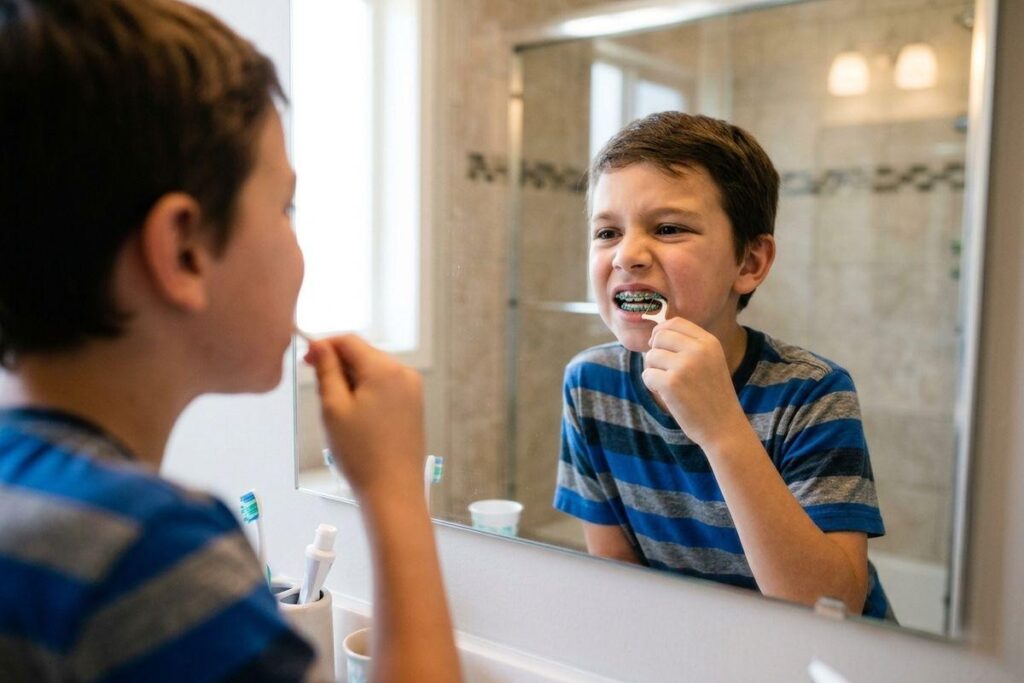
To floss your child’s teeth with braces, brush first to clear loose food, then use a floss threader to slide waxed floss behind the wire and glide it gently along each tooth in a C shape.
Why Floss Matters When Your Child Has Braces
Braces come with brackets and wires that give food tiny hiding spots. Bits of lunch and plaque can tuck in around each bracket, and a toothbrush alone can miss them.
Flossing reaches those spots between the teeth and along the gumline. That daily habit helps reduce cavities and gum trouble while your child’s smile grows into place.
It also keeps breath fresh and teeth feeling clean, which your child will notice after every meal.
Brush First, Then Floss
Start with a good brushing to clear away the loose stuff. Have your child cover every tooth surface, front, back, and along the top where food likes to sit.
Mix gentle side-to-side strokes with small circular motions around each bracket. A clean surface sets up easier flossing, so the floss glides instead of snagging on leftover bits.
Step-by-Step Guide to Floss Braces
Flossing around wires takes a little patience, but a steady routine makes it quick. Walk through these steps together until your child can handle them alone.
- Cut a piece of floss about as long as your child’s arm so you have enough to work with.
- Thread the floss between the wire and the teeth.
- Wrap the ends around your index fingers for better control.
- Gently wriggle the floss in a “C” shape against the side of each tooth.
- Work your way around every tooth, one by one.
Make It Comfy for Your Child
Pick a well-lit, comfy spot where your child can see what they’re doing. Play some music or a favourite show to pass the time.
Go slow and gentle. A calm pace helps your child relax and turns flossing into a habit instead of a chore.

Tools That Make Floss Time Easier
The right tools can turn a tricky task into a two-minute routine. Waxed floss or dental tape slides between teeth without shredding on the brackets.
Floss threaders help you guide the floss behind the wire, and floss picks work well for quick cleanups on busy mornings. A water flosser can be a helpful add-on that rinses around the brackets.
What to Try if Floss Won’t Fit
Some spots stay stubborn no matter how you angle the floss. Interdental brushes have tiny bristles that fit into tight spaces around the wire.
Superfloss, with its stiff end and spongy middle, works for those tricky spots between teeth and brackets.
When to See a Pediatric Dentist in London
Home care does a lot, and regular cleanings round it out. Plan a visit every six months so the team can check your child’s teeth and gums while the braces do their work.
Ask the team for a flossing demo if your child needs a hand with technique. They can show both of you the angles that work with your child’s brackets.
Speak up if bleeding or pain lasts longer than a few days, so the team can take a look.
Ready to help your child keep a clean, happy smile through their braces? Book a checkup with the friendly team at London Little Bites Dentistry and get a flossing demo tailored to your child’s braces.