


Key Takeaways
- Teeth grinding is common in kids, especially between ages 3 and 6
- Stress, pain, and certain medications can trigger grinding
- Many children outgrow it naturally over time
- Visible tooth wear, jaw soreness, or frequent headaches are signs to act on
- A pediatric dentist in London can check for damage and recommend the right next step
- A calming bedtime routine and open conversations can help reduce grinding at home
What Parents Should Know First
Teeth grinding in kids is common and, in many cases, not a cause for alarm. That said, knowing what to watch for can help you catch problems early and get your child the right support when they need it. At London Little Bites Dentistry, we focus on children’s dental care and work with families to support healthy smiles at every stage of growth.
What Teeth Grinding in Kids Looks Like
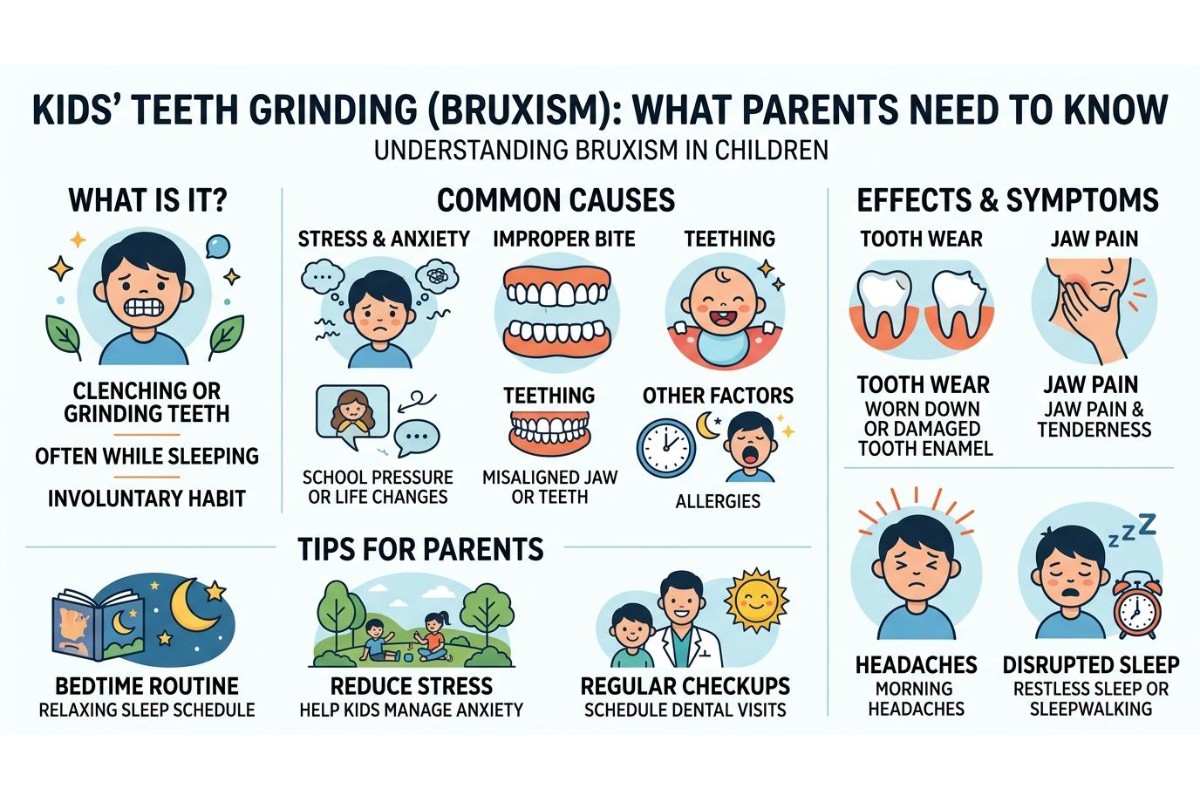
Here are some of the most common signs of teeth grinding:
- Grinding or scraping sounds while your child sleeps
- A sore jaw, headaches, or a tired-looking face in the morning
- Teeth that look flattened, chipped, or worn down
Bruxism, the clinical term for teeth grinding, can affect children of all ages and may show up differently depending on the child.
Why Kids Grind Their Teeth
Common Triggers to Know
There’s rarely just one reason why a child starts grinding their teeth. It often comes down to a mix of physical and emotional factors happening at the same time.
- Stress from school pressures, friendship struggles, or changes in routine
- Physical discomfort like teething pain, earaches, or misaligned teeth
- Hyperactivity or side effects from certain medications
If your child recently started a new school year, moved homes, or went through a big life change, that kind of stress can show up as grinding at night, even if your child seems totally fine during the day. Learning more about the stages of teething in children can also help you connect physical discomfort to grinding patterns you’re noticing.
When Grinding Tends to Start
Grinding most often starts between ages 3 and 6, right around the time kids are navigating a lot of new experiences. The good news is that many children outgrow it naturally as their teeth develop and their stress levels settle.
Grinding doesn’t always need treatment, but monitoring the situation is still a good idea so that you can catch any tooth enamel damage before it becomes a bigger issue.
Signs It May Be Time to See a Pediatric Dentist in London
Some grinding is harmless and fades on its own. Other times, it’s worth getting a professional to look at your child’s teeth. If you’re noticing more than one of the symptoms of teeth grinding, that’s a good signal that you should book an appointment with a pediatric dentist in London.
Catching wear early means more options for protecting your child’s teeth before the damage adds up.
What a Pediatric Dentist Can Do to Help
How a Dentist Checks for Teeth Grinding
At a routine exam, your dentist will look for signs of enamel wear, sensitivity, and changes in tooth shape. They’ll also ask questions about your child’s sleep, habits, and any recent changes at home to help figure out what’s driving the habit.
This kind of conversation helps our team get a clearer picture not just of your child’s teeth, but of what might be going on beneath the surface. Dr. Lee and the rest of our team take a whole-child approach to health.
Treatment Options for Kids
Depending on what the dentist finds, there are a few potential treatments:
- A habit-breaking appliance for more persistent grinding
- A referral for myofunctional therapy, which focuses on the muscles involved in chewing and jaw function
Treatment is tailored to your child’s needs. Not every child who grinds their teeth needs intervention, and a pediatric dentist takes the time to figure out what fits your child’s situation. You can explore more about children’s dental services to get a sense of what a typical visit and care plan can look like.
How to Help Your Child at Home
There’s a lot you can do between dental visits to support your child. Small changes at home can make a real difference in how much they grind.
- Build a calming bedtime routine, like reading together, a warm bath, or quiet music, to help your child wind down before sleep
- Avoid hard or chewy foods in the evening that put extra strain on the jaw
- Talk openly with your child about anything stressful, giving them space to share what’s on their mind
You don’t need to have all the answers. Sometimes just checking in and listening is what helps a child feel calm enough to sleep through the night without grinding.
If you’re keeping an eye on your child’s grinding and want a professional opinion, our team at London Little Bites Dentistry can take a look and help you figure out the right next step. Contact us to book an appointment and give your child’s smile the attention it deserves.